creating keepers of the light
playwright izzy gray shares the inspiration that drove her to write and produce flagstone theatre’s debut play
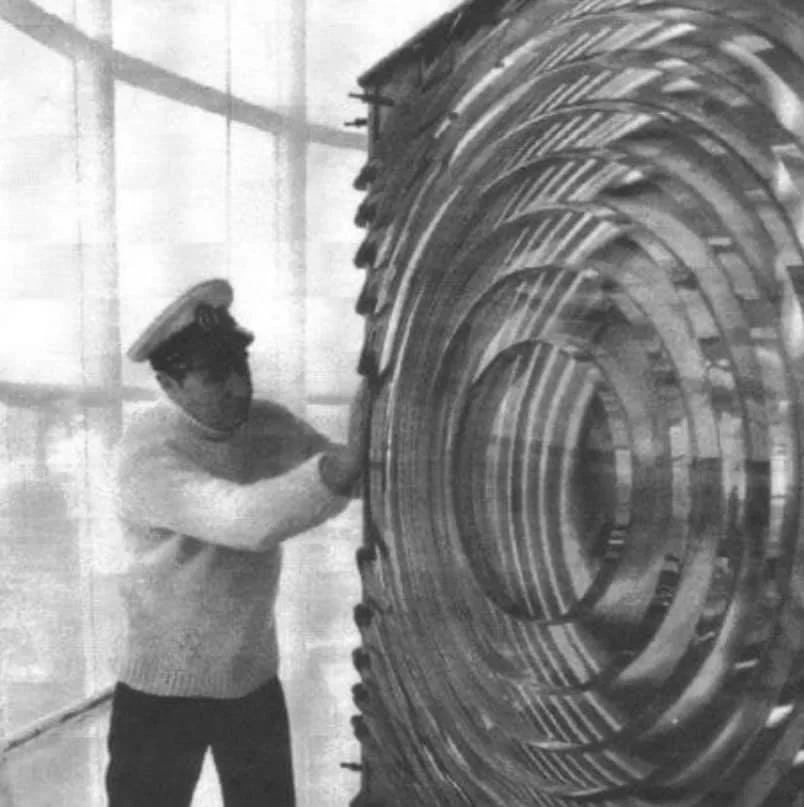
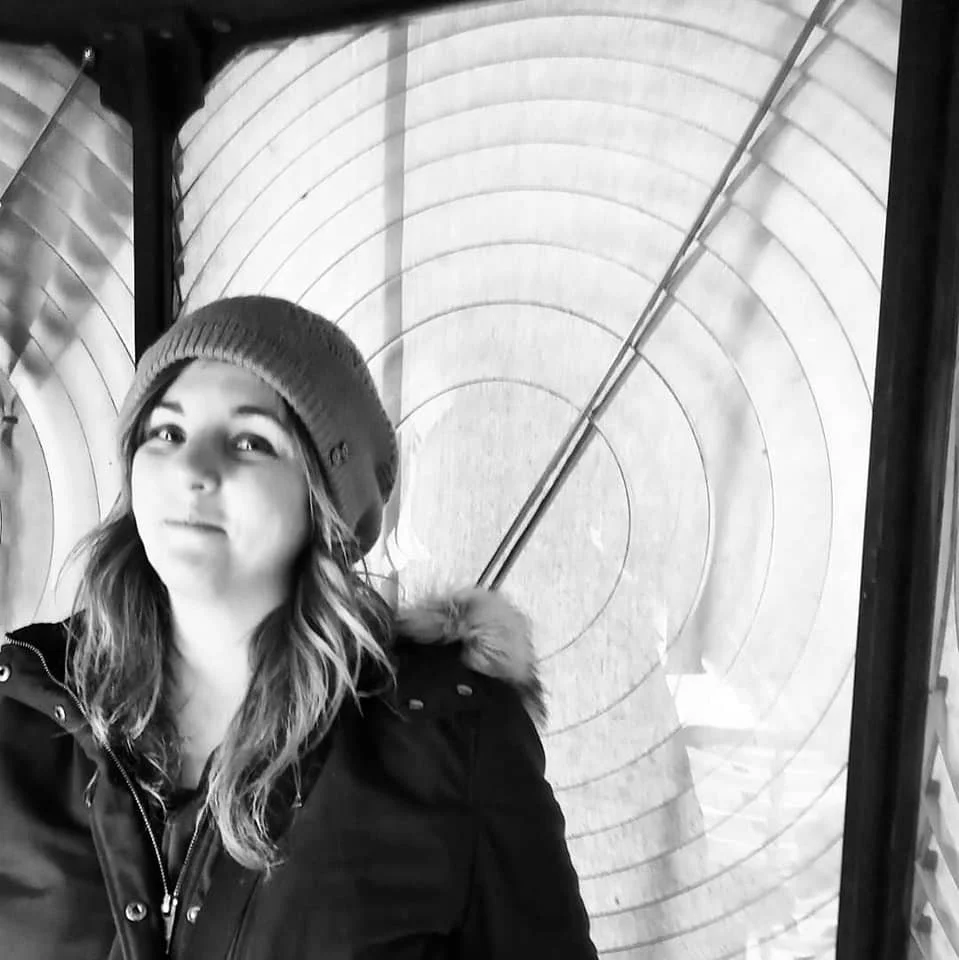
It all started with a lightkeeper from Orkney. A man called Sinclair Craigie. My grandfather.
I wasn’t lucky enough to know Sinclair. We did technically meet, but he passed away suddenly when I was still a baby. Despite that, growing up, his presence was never far from the surface - largely felt through the six-foot hole he seemed to have left in the lives of those who knew him.
He was, by all accounts, a bit of a legend.
Not only did he have a fascinating career - one that saw him manning some of the country’s furthest-flung rock stations with a young family in tow - but his personality seemed every bit as rare. His eccentricities made their way into everyday conversation around our Sunday dinner table as though he were still sat at the helm himself. Anecdotes about pranks he’d play on rookie keepers to pass the time at sea. Yarns spun. Songs I’d always assumed were part of Scottish folk tradition that had, in fact, been concocted during moments of boredom:
“As I were ga’an o’er a field o’ neeps,
A moose ran up the leg o’ me breeks.
It stayed up there for weeks and weeks,
Aaaaaand nobody knew it was there.”
Family lore had it that Sinclair would adopt a new identity - and often a new nationality -whenever he was relocated to a new station, purely for the high jinks. My mum, often frustrated at having to settle into another isolated posting, recalls getting a taxi to one particular lighthouse only for the driver to turn around and say:
“You the new keeper’s daughter? You don’t sound Russian to me.”
He was a man of many talents. You often had to be in those lone stone stations. Woodwork. Carving. Music. But nothing, it seemed, compared to his storytelling.
I often found myself wondering what it would have been like spending a month at sea with him. Truthfully, one evening in his company probably would’ve been enough to put my four years studying Literature at university to shame.
That was exactly the thought I found myself pondering one day in the latter half of my twenties.
I can distinctly remember being at my day job in a theatre box office. It was a quiet shift, and my mind - as it often did - wandered towards the idea of somehow getting words of mine onto a stage one day. I had an MA in English and a postgraduate diploma in Playwriting, but horribly little confidence when it came to sharing anything tangible with a live audience.
I knew I was waiting for the right idea to land. But that, of course, is no wee thing.
It had to mean something.
It had to feel unique.
It had to have heart.
The stakes had to be high.
And what possible setting could isolate characters enough to push them to their absolute psychological limits?
Then it dawned on me.
It should be set in a bloody lighthouse!
It should be inspired by real keepers.
And it had to revolve around something - some incident, some act, some unexplainable event - that forced an audience to question the very nature of storytelling itself.
Then came epiphany number two.
The Flannan Isles.
For anyone unfamiliar with the story: in 1900, three lighthouse keepers - James Ducat, Thomas Marshall and Donald MacArthur - vanished from the Flannan Isles lighthouse, twenty miles west of Lewis. No trace of them was ever found.
It was a mystery that had fascinated me ever since school, where I first encountered Wilfred Gibson’s poem Flannan Isle - a piece that perfectly captured the eerie atmosphere of the abandoned lighthouse through the eyes of the relief crew sent to investigate. Years later, I ended up teaching the poem to a secondary English class myself, and it was brilliant watching a whole new generation debate the disappearance, theories ranging from the plausible to the slightly more far-fetched;
“What if the Mary Celeste got them?!”
I loved the idea of shaping the play around the unknown.
The structure came to me almost instantly: one setting, three actors, two parallel timelines. Each actor would play dual roles - a modern-day technician sent to the island for routine maintenance alongside one of the original 1900 keepers. Throw in a storm to strand the modern crew overnight, reveal that one of them doesn’t know the Flannan story, and let the theories unfold as they begin bringing them to life.
Of course, as the night wears on - and an illicit bottle of whisky gets involved - the stories become wilder, tensions sharper, and eventually the two worlds begin to collide.
I still remember the whir of the ticket printer in the background as I frantically scribbled notes into a journal behind the box office desk. The idea had arrived, and it felt like someone had fired a proverbial rocket up my arse.
This was the play.
There was only the small matter of writing it.
There was absolutely no way I was attempting that without speaking to people who understood lighthouse life firsthand. It was time to start interviewing.
Lighthouses, of course, had been automated for over thirty years by this point, but there were still many former keepers and their families willing to share their experiences with me. Very quickly, I became aware of how lucky I was to be trusted with those stories.
This wasn’t just theatre anymore.
This was living Scottish history. Maritime heritage unfolding in real time. And I knew I had to handle it carefully.
As that responsibility became clearer, I reached out to the Northern Lighthouse Board to let them know what I was working on and to see whether they might like to be involved. I was blown away to discover not only that they were interested, but that they had a Heritage Trust — and wanted to know whether I’d consider using it to help bring the project to life.
“It’s great that you want to tell the story. Why wouldn’t you want to share it?”
The prospect of applying for funding, at that stage in my journey, felt utterly alien.
I was someone who sold tickets for shows. I didn’t make them.
Or at least, not yet.
Of course I wanted to. But I’ll be the first to admit that at this point in my career, I was as green as they came. All I really wanted to do was write the play and share it with people who cared about the story.
Only the more people I spoke to, the more I realised just how much the story meant to Scotland’s coastal communities. So many people had connections to lighthouses and the men who worked within them. Many had direct links to the Flannan Isles three themselves.
And when descendants started appearing in my DMs, I knew the appetite for it was real.
Tentatively, I arranged to meet a pal for coffee - someone who ran her own independent theatre company. She was an exceptionally talented writer and director, and quite frankly, I admired her balls.
I went into the meeting wondering whether, if the project ever reached that stage, she might want to direct the play.
What I hadn’t accounted for was the healthy wallop of realism she was about to smack me over the head with.
“What would your dream be for this show? Where do you want it to be seen?” she asked, brows furrowed over her Americano.
“Honestly? I’d love to tour Scotland. Take it to coastal communities connected to the story. Share it with people with lighthouse links. Maybe even do something site-specific.”
“Uh huh…” Another sip of coffee. “With what funding?”
“…Funding?”
“And who’s your producer?”
“…Producer?”
“PLEASE tell me you’re not planning to produce this yourself?”
The challenges came like lightning strikes. With every question, I felt my soul shrivel smaller and smaller until it must have resembled the ghost of a raisin.
I wanted the chair to swallow me whole.
My inexperience, naivety and total lack of understanding about the complexities of independent theatre-making in an already brutal Scottish arts landscape suddenly lay exposed across the table like spilled ink.
She was absolutely right, of course.
At the time, I think I left that coffee shop feeling like a balloon with a hole.
But with hindsight, I’ll always be grateful for that conversation.
Her realism forced me to get curious. To ask bigger questions of myself. To stop romanticising the idea of “making theatre” and properly learn what it actually takes to drag a project from the depths of your imagination into a room full of living, breathing audience members.
It forced me to take risks. To develop skills I didn’t yet have. To become not just a writer, but a producer, fundraiser, organiser, negotiator, problem-solver and occasional professional blag artist.
A little bit batshit, perhaps.
But far braver than I’d previously given myself credit for.
And yet.
This script no longer felt like just my script.
It had a collective identity. A shared legacy. Maritime heritage and lived experience were etched into every scene, and I had never felt so connected to a piece of writing in my life.
In exploring their story, I felt as though I’d come to know the disappeared men, their families and their communities.
And in writing about keepers, I was finally getting to have the conversations with my grandad that I’d always wanted to have.
There was a fire in my belly.
While the easier option would’ve been to bring a producer on board, I knew deep down that I wanted to build a home for this story myself — one brick at a time. And if that meant learning entirely new skills along the way, then that’s what had to happen.
Three months later, armed with a final draft and a level of feigned resilience that surprised even me, I hit “submit” on a funding application to the Northern Lighthouse Heritage Trust.
Luckily, they said yes.
Their support - combined with incredible contributions from sponsors including Arnold Clark, NorthLink Ferries and Gray Associates, alongside generous venue partnerships and just about every favour I could possibly pull - gave us enough resource to launch our first tour.
Incredibly, my employer at Capital Theatres - the very place where I’d first conceived the idea behind a box office desk - also got behind the project, giving us space to develop, rehearse and ultimately premiere the show.
Of course, before we could even get to that point, we needed a team.
And I mean this sincerely when I say that finding that team has been one of the best decisions of both my artistic and personal life.
Every single person who joined the Keepers crew brought their own kind of magic with them. Experience. Talent. Kindness. Humour. If they thought I was a complete fraudster, they hid it exceptionally well.
And if I could go back and relive every moment of those early development days, I’d do it again, and again, and again.
I was in awe of all of them.
In May 2022 (we’ll just quietly put that wee pandemic to one side for the purposes of this article), we toured Keepers of the Light for the first time, with performances in Edinburgh, Aberdeen, Lewis and Orkney.
Then, in September 2023, we received a second round of support from our pals at the NLB, allowing us to curate a tour specifically aimed at coastal communities with lighthouse links and connections to the story itself - including Oban, Greenock, Findhorn, St Andrews, Edinburgh again, and most importantly, the village of Breasclete: the hamlet the disappeared keepers would have called home whenever they were back on land.
There are far too many incredible memories to share here - and attempting to do so might reduce me to a waterlogged mess - but to give you a sense of the kind of magic that rural touring can create, here are a few personal highlights:
Taking a question during a post-show Q&A from a descendant of one of the disappeared keepers. This actually happened several times throughout the tours, but the first occasion really brought home why it mattered that we took the show to these communities.
Meeting a former colleague of my grandad’s in Oban. After the show, he handed me a wee white envelope containing two photographs of Sinclair at work. In one of them, he’s cycling around a tiny helipad on the remote Skerryvore rock station because it was apparently the only way to get outdoor exercise.
Seeing Stromness Town Hall full to the rafters. This was my hometown hall — the place where I’d performed in youth drama as a kid — and suddenly it was packed with ghosts from my past. My entire family, including my young nieces and nephew, helped with the get-out afterwards, and there was something incredibly moving about seeing my family blended with my cast and crew, hauling set pieces through impossibly narrow corridors on a show that I had somehow made happen. It’s not a typical presenting venue, so hearing people from my old community thank us for bringing the show there really hit home. Quite literally.
A deeply spooky experience during our first visit to Lewis. Earlier that day, we’d visited the ruins of one of the keepers’ crofts, and the actor playing him had pocketed a small rock from the site. That evening, over a few whiskies, we admitted this perhaps hadn’t been our finest idea and started debating whether taking the stone on tour might constitute genuinely terrible luck. At that exact moment, the clock on the wall started spinning uncontrollably.
Taking the show to Breasclete Community Centre. Honestly, everything about that experience felt magical. Our hotel literally overlooked the keepers’ old shore station. Local school pupils had created poster displays for us. The community arrived armed with industrial quantities of tea, cake and bacon rolls. We had catastrophically underestimated attendance numbers, and even midway through the performance, locals were still turning up in vans carrying their own chairs. At one point, one of the actors had to cut through the audience and I physically had to clear him a route because there were no aisles left. Risk assessments take on a slightly different meaning in the Hebrides.
No matter where we performed, we were met with extraordinary warmth.
It wasn’t uncommon for audiences to stay behind afterwards to share their own stories, or to shake the cast’s hands for bringing the characters - and the keepers they represented - to life with such care.
And I think that’s when I really began to understand what the play had become.
What had started as a story inspired by my grandad had slowly turned into something much bigger than me. Every venue uncovered another connection. Another family story. Another person who remembered the lighthouse service, or the people within it.
In telling the story of these keepers, I somehow felt closer to Sinclair too. Closer to the version of him I’d grown up hearing about around the dinner table. Closer to the life he’d lived.
Perhaps the moment that brought all of that into sharpest focus came shortly after our second tour.
On a freezing Boxing Day morning, Fraser and I drove through to Lossiemouth, where my grandparents are buried. Standing there, with frost still clinging to the grass, the enormity of everything we’d achieved suddenly hit me all at once.
On my grandad’s gravestone is a small engraving of a lighthouse.
I remember standing there quietly for a moment before saying:
“I hope we did you proud.”
Afterwards, Fraser drove us to Covesea Lighthouse - the final station Sinclair had been based at before his death. The weather was horrendous, but somehow he still convinced me to scramble down to a tiny cove beneath the lighthouse itself.
Standing there beside the sea, with waves washing around our feet, he told me he thought my grandad would’ve been proud of what the show had become.
Then he told me he was proud of me too.
Which was already emotional enough, frankly.
But before I had much chance to recover, he followed it with:
“You know what would make this year even better?”
And then he got down on one knee.
What other answer was there but…”aye, go on then!”, a philosophy that’s carried us well through life and through making theatre happen.
We still receive enquiries about Keepers of the Light to this day, and I’ll always feel incredibly fortunate to have been part of something that meant so much to so many people.
I often get asked whether the show will return.
As Alec might say,